
It started with a pitch in my inbox that annoyed me more than it probably should have. It was for a “virtual artist” with a rendered image, a Spotify catalogue, a tagline, a producer, and a lyricist. At first glance, it looked like dozens of press kits we receive every week at Electronic Groove. There was only one rather important difference. The artist herself did not exist.
Photo by Pim Myten on Unsplash
My reaction was not some intellectual protest against technology. It was much simpler: Why should I care? I use AI, I find it incredibly useful, and I have no interest in pretending technological progress should stop, especially while running a publication devoted to electronic music. This culture exists because people took machines and discovered things nobody had originally intended them to do. Drum machines, samplers, synthesizers, sequencers, computers and software are part of our history. The machine is not the problem. My problem begins when the machine replaces the person with something to say.
When I first became obsessed with music, great records intimidated me. I would hear something extraordinary and think that I could never make anything like it. I did not have that talent, that knowledge or that instinct, and strangely enough, I was completely comfortable with that. I did not need to make the record. I wanted to listen to it. There was something beautiful in recognizing that another person could do something I could not. Someone had spent years training their ear, making mistakes, learning an instrument, understanding a studio, writing, recording, and eventually developing a language of their own. That distance did not make me feel excluded. It made me admire them.
Looking back, that admiration probably has a lot to do with why Electronic Groove exists. I did not become the person making the records. I became interested in the people who did. I wanted to understand who they were, what they were living through, where their ideas came from, and why certain records had to exist. I wanted to hear those stories, document them, and share them with other people who cared as much as I did. For me, a great record was never just the sound coming out of the speakers.
“The machine is not the problem. My problem begins when the machine replaces the person with something to say”
Pink Floyd was not simply studio technique and musicianship. Syd Barrett, his history with the band, his absence and his unexpected appearance during the sessions for ‘Wish You Were Here’ became part of the emotional weight surrounding that music. Bob Marley was never only a voice over a rhythm section. Jamaica, politics, faith, violence, exile, and the circumstances of his life became inseparable from the way generations heard those songs. You wanted to know where a record was made, who was in the room, what was happening between them, what they believed, what they were arguing about, who they loved, what they were afraid of, sometimes even what they were taking. Those stories became part of the mythology.
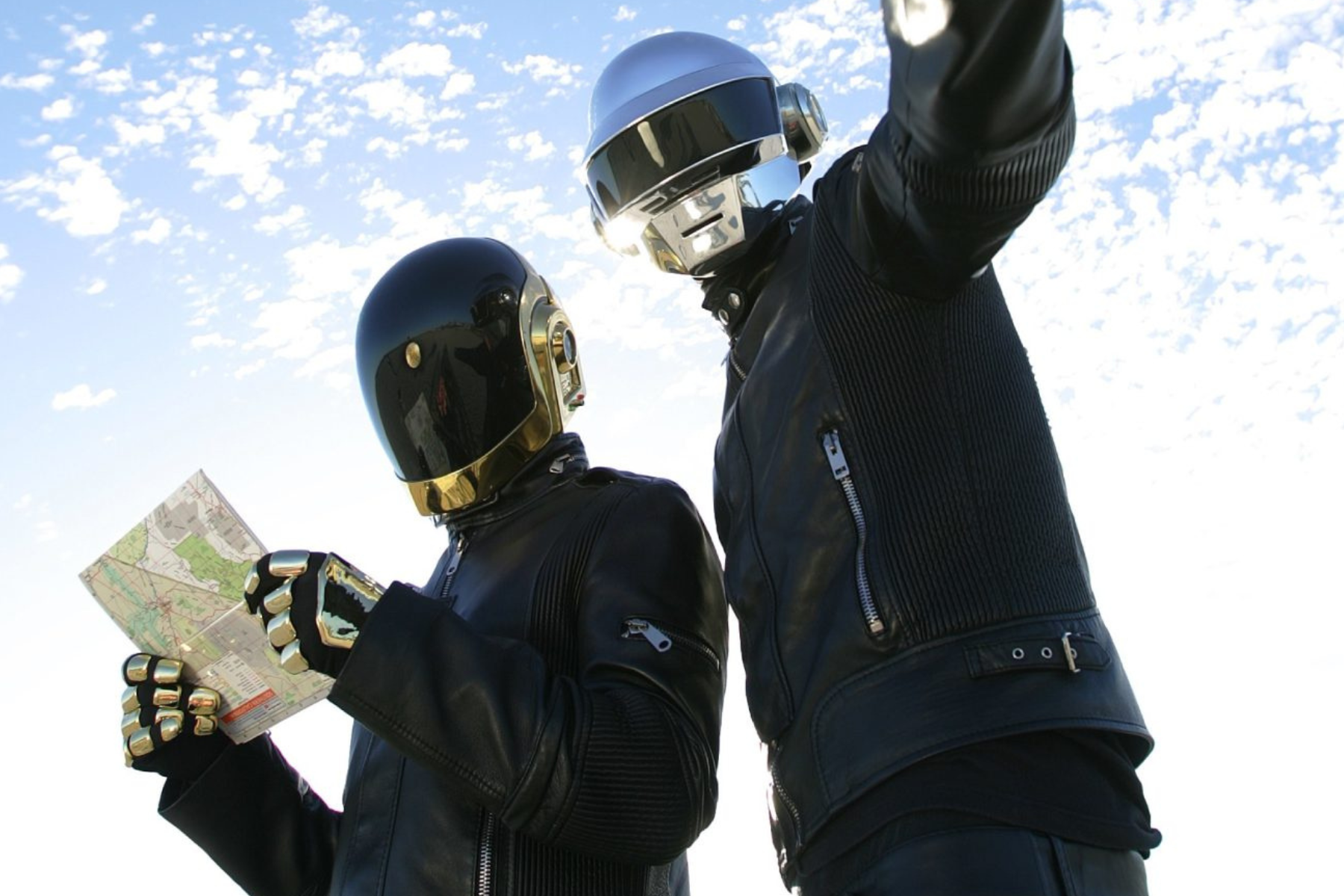
Electronic music has always had a different relationship with authorship. The producer may be almost invisible. A record can arrive on a white label with very little context. DJs take music created by other people and place it inside a completely different story. Tracks move quickly through clubs, playlists and record bags. But the human being has always been there. Frankie Knuckles was working with records, tape and machines, but he was also watching people. He understood what happened when a section lasted longer, when a rhythm connected, when a room wanted something else. Daft Punk surrounded themselves with hardware while making ‘Homework,’ but Thomas Bangalter and Guy-Manuel de Homem-Christo were still making the decisions. Burial made Untrue through software and samples, yet the record feels inseparable from one person’s relationship with London at night, with empty streets, distant clubs and those strange hours surrounding a night out.
Technology changed the possibilities. It did not remove the person. That difference becomes even clearer to me when I walk into a club. Maybe an AI system will create a track tomorrow that completely fools me. I might love it, save it, play it repeatedly, and later discover there was no traditional artist behind it. Fine. You got me. But when I go to a club, I still want the DJ to be human, not because I need to worship the person behind the booth or spend the night filming them with my phone, but because that person is participating in what is happening in the room.
A room can feel completely different twenty minutes later. People arrive, people leave, one record connects, and another falls flat. The energy rises and disappears. The DJ notices it and decides what to do next. Sometimes the decision is wrong. Sometimes one record completely changes the room. The audience changes the DJ, and the DJ changes the audience. The comparison is not exact, but there is something of a conductor in that role. Someone is interpreting a moment and guiding a group of people through it, while those same people are constantly sending information back.
Could a machine eventually become better at reading a room? Probably. A club could be filled with cameras and sensors measuring movement, crowd density, bar activity, how long people remain on the floor, and how strongly they react to each record. A system could process more information than any human DJ and calculate the statistically ideal track to play next. But who wants to dance to a math equation? I am not looking for an optimized night out. I am looking for an experience.
“But who wants to dance to a math equation? I am not looking for an optimized night out. I am looking for an experience”
Sasha recently described the original thinking behind Northern Exposure Redux in a way that captures exactly what I mean. “We didn’t want to just deliver a Saturday night peak time album. We wanted to capture the whole environment, the atmosphere that’s around the dancefloor, around our peak sets, what goes on after hours, and what goes on before.”
He is not talking about frequencies or production techniques. He is talking about memory. Sasha & John Digweed could approach the record that way because they had lived those nights. They knew the anticipation before the club, the room slowly filling, the peak hours, what happened behind the booth, the hours afterward and the strange transition back into ordinary life. Thirty years later, Sasha can also look back and recognize that something they were part of became far bigger than anyone understood at the time.

An AI can study all of that. It can analyze thousands of DJ sets, understand harmonic relationships, tempos, programming patterns, and the musical vocabulary associated with every stage of a night. What it cannot do is remember being there. It cannot remember walking into an empty club before the doors opened, watching a room fill or seeing the sunrise after playing for hours. It cannot miss somebody who used to stand beside the monitors, or look back three decades later and realize that a culture it helped build became part of millions of other people’s lives.
That does not mean AI cannot make music that affects me. I suspect it can. Maybe it already has. Nick Cave has spoken about art as something connected to human struggle and limitation, and I understand exactly what he means. Not because every artist needs to suffer or because every great record requires some dramatic personal story, but because art, for me, is communication between people. Somebody experienced something, imagined something, became obsessed with an idea, spent years becoming capable of expressing it, failed repeatedly before finding the right answer, then made something and gave it to us.
“What worries me is not that AI will become capable of making good music. What worries me is that we may eventually stop caring whether anybody was there at all”
That exchange is one of the reasons I fell in love with music. It may also be why this conversation feels particularly urgent now. We are surrounded by more music than at any other moment in history. New tracks arrive constantly. We stream them, save them, skip them, hear them in sets and move on, while another thousand appear behind them. The easier it becomes to separate music from the person who made it, the easier it becomes to treat music simply as material, five minutes of audio designed to produce a particular feeling before the listener moves on to something else.
If that is all we want, the machines will probably become very good at supplying it. What worries me is not that AI will become capable of making good music. What worries me is that we may eventually stop caring whether anybody was there at all.
I do not believe humans and machines need to be enemies in this story. Electronic music has spent decades proving what extraordinary things can happen when people use technology with curiosity, intention, and imagination. I simply want the human being to remain at the center.
A machine might eventually write a hook that stays in my head. It may even make a record that moves me. I can accept that. But when music truly stays with me, I still want to know there was a person on the other side who had something to say. And when I walk into a club, I still want a human being in the booth, listening to the same room I am in.